

Posted On: August 10, 2026
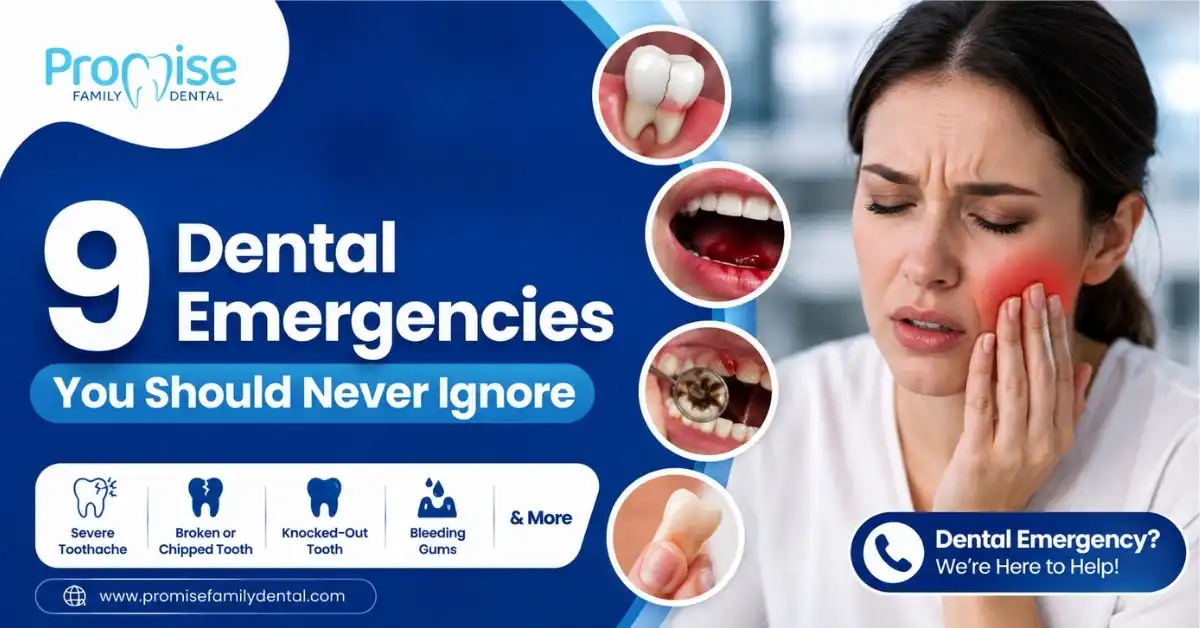
9 Dental Emergencies You Should Never Ignore
Some tooth problems can wait for a routine visit. Others cannot. Knowing the difference protects your health, your comfort, and often the tooth itself.
In 2026, many people still delay care during true dental emergencies, hoping the pain or swelling will fade on its own. It rarely does. This guide from Promise Family Dental in Suffern walks through nine dental emergencies you should never ignore, why each one matters, and what to do first while you arrange care.
If any of these situations sounds like what you or a family member is facing right now, call our Suffern dental office at (845) 356-8844. Prompt action often makes the difference between a simple fix and a much bigger problem.
How to Tell a Real Dental Emergency from a Problem That Can Wait
A helpful rule of thumb: severe pain, active bleeding, swelling, or the risk of losing a tooth all point to a dental emergency. A tiny chip with no pain can usually wait a few days. Constant throbbing, a swollen jaw, or a tooth that was just knocked out cannot. When you are unsure, it is always safer to call an emergency dentist and describe your symptoms than to wait and hope.
According to the Cleveland Clinic, an untreated dental abscess can spread to the jawbone, surrounding facial tissues, and in serious cases the bloodstream, which is why prompt care matters.
Source: Cleveland Clinic, Dental Emergencies
1. A Knocked-Out Tooth
Why you shouldn't ignore it
A knocked-out permanent tooth is one of the clearest dental emergencies of all. The tooth can often be saved, but the window is short. Acting within the first hour gives you the best chance of keeping it.
What to do right now
Pick the tooth up by the crown, which is the white chewing surface, and never touch the root. Rinse it gently if it is dirty, without scrubbing. Try to place it back in the socket, or keep it moist in milk or inside the cheek. Then get to an emergency dentist right away, because a knocked-out tooth is time-sensitive.
2. A Cracked or Broken Tooth
Why you shouldn't ignore it
A cracked or broken tooth is not always visible, but it often hurts when you bite or drink something cold. A crack that reaches the nerve is urgent, since it can lead to infection if left alone.
What to do right now
Rinse your mouth with warm water and hold a cold compress against your cheek to ease swelling. Save any broken pieces in a clean container and bring them with you. Avoid chewing on that side, and see a dentist promptly to protect the broken tooth.
3. Severe or Persistent Toothache
Why you shouldn't ignore it
Pain is your body's warning signal. A toothache that throbs constantly, wakes you at night, or spreads to your ear or jaw often means decay, infection, or a crack deep inside the tooth. These causes do not resolve on their own.
What to do right now
Rinse with warm salt water and gently floss around the tooth to remove any trapped food. Over-the-counter pain relievers such as ibuprofen or acetaminophen can help when taken as directed. Never place aspirin directly on the gum, since it can burn the tissue. Book an evaluation quickly so the source can be found and treated.
4. A Dental Abscess or Facial Swelling
Why you shouldn't ignore it
A dental abscess is a pocket of infection at the root of a tooth or in the gum. This is the emergency we worry about most, because infection can spread to the jaw, neck, and beyond. Swelling in the face, a fever, or a bad taste in the mouth are warning signs.
What to do right now
Rinse gently with warm salt water and apply a cold compress to the outside of the cheek. Do not apply heat, and do not try to drain the swelling yourself. Contact an emergency dentist promptly, and treat it as a 911 situation if swelling affects your breathing or swallowing.
5. A Lost Filling or Lost Crown
Why you shouldn't ignore it
A lost filling or crown may not hurt at first, but it leaves the tooth exposed to bacteria and further damage. Sensitivity, decay, or a fracture can follow quickly. A lost crown is one of the more common dental emergencies we see in Rockland County.
What to do right now
Keep the crown if you still have it and bring it to your appointment. Over-the-counter dental cement can protect the area as a short-term measure only. Avoid chewing on that side, and see a dentist soon so the tooth can be properly restored.
6. A Loose Adult Tooth
Why you shouldn't ignore it
Adult teeth should never feel loose. A loose permanent tooth can signal an injury to the supporting bone or a serious gum infection. Without prompt care, the tooth may be lost for good.
What to do right now
Avoid wiggling the tooth and stick to soft foods until you are seen. Do not chew on that side. Call an emergency dentist so the tooth can be evaluated and, when possible, stabilized before the damage progresses.
7. Bleeding That Won't Stop
Why you shouldn't ignore it
A small amount of bleeding after a minor injury is normal. Bleeding that does not slow after 10 to 15 minutes of gentle pressure is not. Ongoing bleeding can point to a deeper injury or an underlying issue that needs urgent evaluation.
What to do right now
Apply steady, gentle pressure with clean gauze or a damp tea bag. Keep your head elevated and stay calm. If the bleeding does not stop after about 15 minutes, contact a dentist or go to the nearest emergency room.
8. An Injured Jaw or Facial Trauma
Why you shouldn't ignore it
A blow to the face during sports, a fall, or an accident can injure more than a tooth. If your teeth no longer fit together correctly, you may have a structural injury or a broken jaw. This needs prompt professional assessment.
What to do right now
Apply a cold compress to control swelling and avoid eating until you are examined. For a suspected broken jaw, a serious head injury, or loss of consciousness, go to the emergency room or call 911 first. Your dental team can then address any tooth damage.
9. A Broken Braces Wire or Bracket
Why you shouldn't ignore it
Orthodontic problems count among everyday dental emergencies for families with children and teens. A broken wire or loose bracket can poke the cheek, cause sores, and slow treatment progress. It is uncomfortable and worth addressing quickly.
What to do right now
Cover a sharp wire end with orthodontic wax or a small piece of sugarless gum to protect your cheek. Do not cut the wire yourself, since a piece could be swallowed. Call the office to arrange a prompt repair.
When a Dental Emergency Becomes a 911 Call
Most dental emergencies are best treated in a dental office, because hospital emergency rooms usually cannot reimplant teeth or repair dental work. Some symptoms, however, need immediate medical care. Call 911 or go to the nearest emergency room first if you experience any of the following:
- Trouble breathing or swallowing
- Bleeding that will not stop after 15 minutes of pressure
- A suspected broken jaw or significant facial injury
- A serious head injury, confusion, or loss of consciousness
- Swelling that spreads into the neck or around the eye
These signs can indicate a spreading infection or a major injury. When in doubt, protect breathing and control bleeding first, then call an emergency dentist for the tooth itself. Most dental emergencies, though, are handled best in the dental chair.
A Real-World Example from Suffern
Picture a Friday evening in Suffern. A parent notices their child's cheek is swollen and warm after a few days of mild tooth pain that seemed to be improving. Rather than waiting for Monday, they call the office, describe the swelling and low fever, and are guided in for prompt care.
Because the abscess was treated before it spread, the child recovered comfortably. The lesson is simple: swelling and lingering pain are dental emergencies that reward quick action.
How to Prevent Dental Emergencies
Not every one of these dental emergencies can be avoided, but many can. A few habits meaningfully lower your family's risk across Suffern, Airmont, Monsey, and the rest of Rockland County.
- Wear a custom mouthguard during contact sports, every time.
- Avoid chewing ice, hard candy, and popcorn kernels.
- Never use your teeth to open packages or bottles.
- Keep regular checkups so small issues are found before they become urgent.
Keeping a small home dental first-aid kit helps too. Clean gauze, a cold pack, dental wax, a small lidded container, and our phone number in one place can make the first few minutes far less stressful.
Frequently Asked Questions
What is considered a dental emergency?
A dental emergency involves severe pain, bleeding that will not stop, swelling, or the risk of losing a tooth. A knocked-out tooth, a broken tooth, a dental abscess, a lost crown, and a loose adult tooth all qualify. When you are unsure, it is safer to call an emergency dentist and describe your symptoms than to wait.
How do I know if a toothache is a dental emergency?
A toothache is likely urgent when the pain is severe, constant, or comes with swelling, fever, or a bad taste in the mouth. These signs often point to infection that will not clear on its own. Pain that keeps you up at night deserves a prompt call to your dentist.
Should I go to the ER or a dentist for a dental emergency?
For most tooth injuries, a dentist is the right choice, because emergency rooms usually cannot reimplant teeth or repair dental work. Go to the ER or call 911 first if you have trouble breathing or swallowing, uncontrolled bleeding, a possible broken jaw, or a serious head injury.
Don't Wait Out a Dental Emergency
The nine dental emergencies above share one thing in common: they respond far better to quick action than to a wait-and-see approach. Protecting breathing and stopping bleeding come first, and for tooth injuries, timing often decides the outcome. Knowing these warning signs in advance helps you stay calm and act with confidence when it counts.
Promise Family Dental provides gentle, prompt emergency dental care for children, adults, and seniors throughout Suffern and Rockland County. Our experienced team focuses on comfort, clear guidance, and personalized treatment, so you always know what is happening and what comes next.
If you are facing a dental emergency right now, call our Suffern dental office at (845) 356-8844 for prompt guidance, or request an emergency dental appointment online.
Clinically reviewed by: Dr. Jacob John, DDS, Doctor of Dental Surgery, NYU College of Dentistry, with nearly two decades of clinical experience at Promise Family Dental in Suffern, NY. Last reviewed: August 2026.
This article is general information about dental emergencies and is not a substitute for professional evaluation. For advice about your specific situation, please contact Promise Family Dental or, in a life-threatening emergency, call 911.
Authoritative references: American Dental Association (MouthHealthy) dental emergencies guide and the Cleveland Clinic dental emergencies overview.
Article Author

Arobit
Blog Admin
Tags
Latest Posts
-
Smile Contouring: The Fastest, Least-Invasive Way to Refine Your Smile's Shape
-
Implant-Supported Dentures: The Premium, Fixed Alternative to Traditional Removable Dentures
-
Dental Implants in Suffern vs. Dentures vs. Bridges: Which Tooth Replacement Option Is Right for You?
-
Invisalign vs. Traditional Braces: An Honest Comparisons
-
What a "Top Dentist in Suffern" Listing Actually Means — and How to Verify It
Similar Posts
-
Implant-Supported Dentures: The Premium, Fixed Alternative to Traditional Removable Dentures
-
Invisalign vs. Traditional Braces: An Honest Comparisons
-
5 Signs You've Found a Trusted Dentist for Your Family
-
5 Things to Look For When Choosing a Family Dentist in Rockland County
-
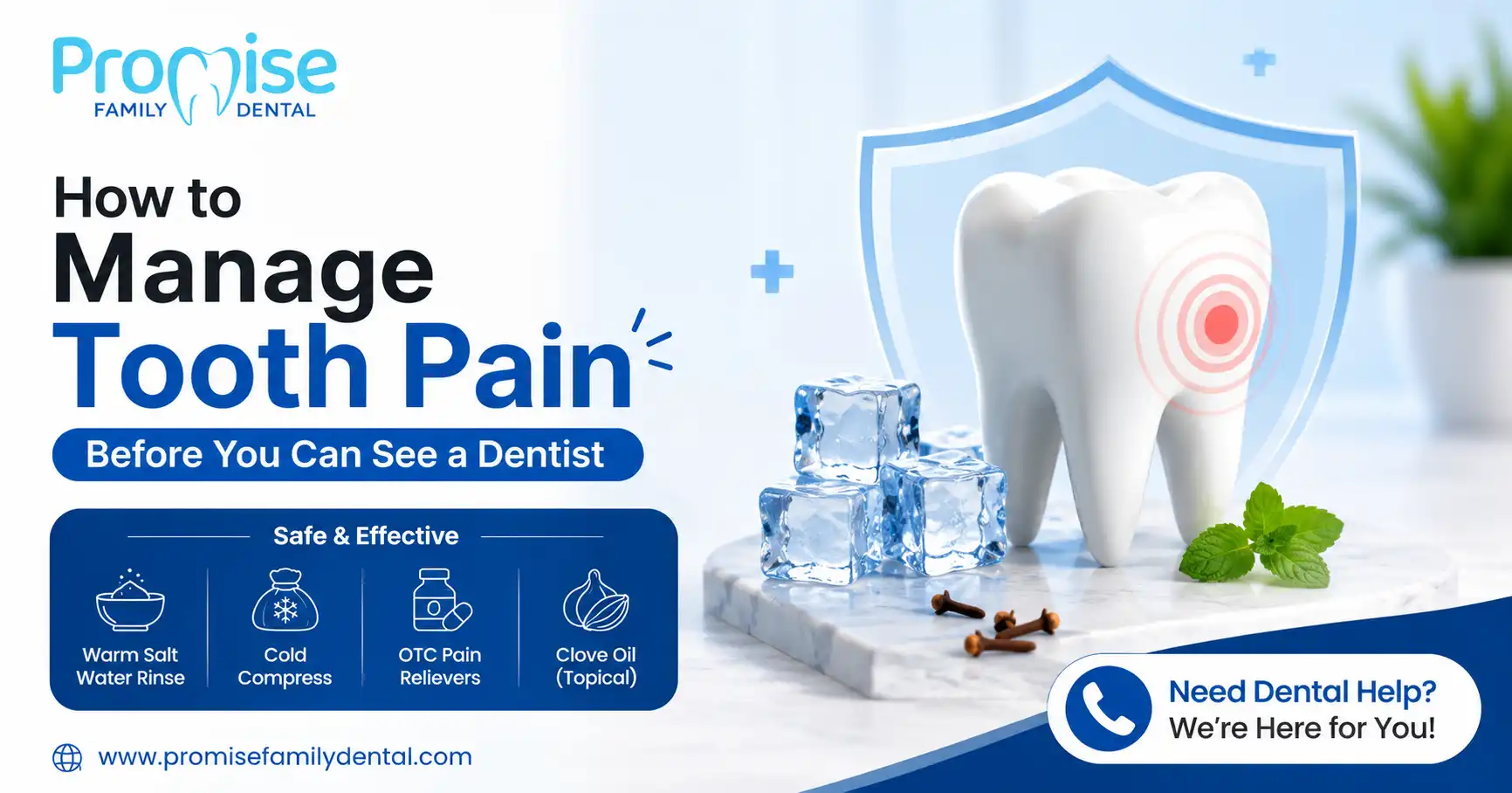
Tooth Pain Relief: How to Manage a Toothache Before You Can See a Dentist


