

Posted On: August 10, 2026
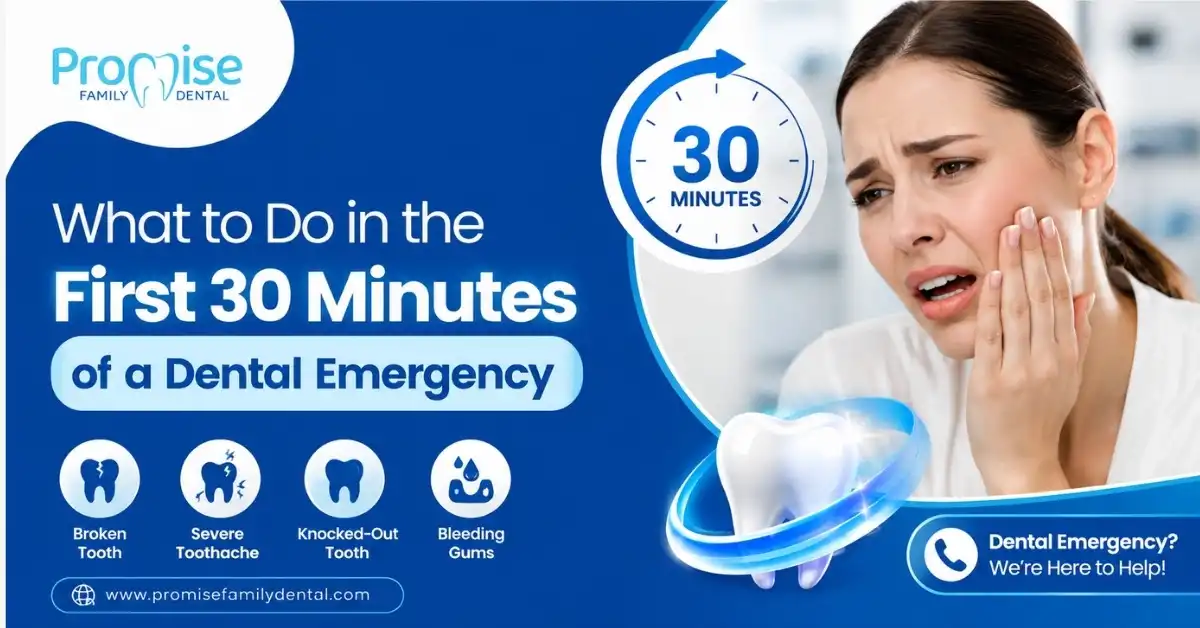
What to Do in the First 30 Minutes of a Dental Emergency (Before You See an Emergency Dentist)
A knocked-out tooth on the soccer field. A molar that cracks during dinner. Sudden swelling that turns a normal evening into a scramble. Dental emergencies rarely happen at a convenient time, and in the moment it is easy to freeze. The good news is that the first 30 minutes are often the most important, and a few calm, correct steps can protect your tooth and reduce pain before you reach an emergency dentist. This guide from Promise Family Dental in Suffern walks you through exactly what to do, minute by minute, in 2026.
Keep this page handy. If you are helping a child, a parent, or a neighbor in Rockland County, the steps below apply to almost every common dental emergency. When you are ready, we are only a phone call away at (845) 356-8844.
Why the First 30 Minutes Matter Most
Many dental injuries are time-sensitive. A tooth that has been knocked out has the best chance of being saved when it is handled gently and placed back into the socket or kept moist within the first hour. Waiting can allow swelling to build, pain to worsen, and a small problem to become a larger one. Acting quickly does not mean panicking. It means following a short, clear sequence while you arrange care with an emergency dentist.
According to the American Dental Association, a knocked-out permanent tooth should be kept moist at all times, ideally placed back in the socket or stored in milk, and brought to a dentist right away.
Source: American Dental Association, MouthHealthy
That single principle, act fast and keep the tooth moist, guides most of what follows. Set a mental timer, stay calm, and work through the steps for your specific situation until your emergency dentist can take over.
When to Call an Emergency Dentist vs. When to Head to the ER
Most dental emergencies are best treated in a dental office, because hospital emergency rooms are usually not equipped to reimplant teeth or repair dental restorations. For a broken tooth, a knocked-out tooth, a lost filling, or a painful toothache, your first call should be to an emergency dentist.
Some symptoms, however, point to a medical emergency that goes beyond the tooth itself. Call 911 or go to the nearest emergency room first if you or your child experiences any of the following:
- Trouble breathing or swallowing
- Bleeding that will not stop after 10 to 15 minutes of gentle pressure
- A suspected broken or dislocated jaw
- A serious head injury, loss of consciousness, or confusion after an accident
- Swelling that spreads into the face, neck, or around the eye
These signs can indicate a spreading infection or a significant injury that needs immediate medical attention. When in doubt, treat breathing and bleeding first, then call your dentist for the tooth. If you are unsure how serious your situation is, call our office and describe what happened. We can help you decide on the safest next step.
Knocked-Out Tooth: What to Do in the First 30 Minutes
A knocked-out adult tooth, which dentists call an avulsed tooth, is one of the true dental emergencies. Handled correctly, it can often be saved. Here is what to do the moment it happens.
- Pick the tooth up by the crown. The crown is the white chewing surface. Never touch the root, which is the pointed end that sat inside the gum. The delicate cells on the root are what allow the tooth to reattach.
- Rinse it gently if it is dirty. Use water or milk for a few seconds. Do not scrub it, and do not remove any tissue attached to it.
- Try to place it back in the socket. Make sure it faces the right way, then hold it in place with light pressure or by biting softly on clean gauze. Never force it.
- If you cannot reinsert it, keep it moist. Store the tooth in milk, tuck it inside the cheek pouch of an adult, or use a tooth-preservation product with the ADA Seal of Acceptance. Plain water is a last resort only.
- Call an emergency dentist and head over right away. The sooner you are seen, the better the chance of saving the tooth.
For a baby tooth that is knocked out, do not try to reinsert it, since that can harm the developing permanent tooth underneath. Keep it moist, and call our team so we can guide you.
Cracked or Broken Tooth: First Aid Steps
A cracked tooth or broken tooth is not always visible, but it often brings sharp pain when you bite or drink something cold. The severity depends on how deep the damage runs. A minor chip may be cosmetic, while a crack that reaches the nerve is urgent. Either way, prompt care protects the tooth.
- Rinse your mouth with warm water to clean the area.
- Hold a cold compress against your cheek, about 15 minutes on and 15 minutes off, to ease swelling and pain.
- Save any broken pieces in a clean container and bring them with you.
- Cover a sharp edge with dental wax or a piece of sugarless gum so it does not cut your tongue or cheek.
- Avoid chewing on that side and skip very hot, cold, or hard foods until you are seen.
Over-the-counter pain relievers such as ibuprofen or acetaminophen can help, taken as directed on the label. Never place aspirin directly against the gum or tooth, because it can burn the soft tissue. Even a small chip deserves a quick evaluation by an emergency dentist, since rough edges and hidden cracks can worsen over time.
Severe Swelling and Dental Abscess: How to Respond Safely
Swelling around a tooth, along the gum, or in the face can signal an infection known as a dental abscess. This is one situation we take seriously, because infection can spread. While you arrange emergency dental care, you can take a few gentle steps at home.
- Rinse with a mild salt-water solution, about half a teaspoon of salt in a glass of warm water.
- Apply a cold compress to the outside of the cheek to reduce swelling.
- Use over-the-counter pain relief as directed if you are able to.
Do not apply heat to the area, and do not try to drain the swelling yourself. As noted earlier, if the swelling spreads toward your eye or neck, or you have any trouble breathing or swallowing, treat it as a medical emergency and seek care immediately. Otherwise, call an emergency dentist promptly so the source of the infection can be evaluated and treated.
A Real-World Example from Rockland County
Consider a common scenario. A parent in Airmont is at a Saturday game when their 12-year-old takes an elbow and loses a front tooth. Instead of rinsing it under a strong tap or wrapping it in a tissue, the parent picks it up by the crown, slips it into a cup of milk from the cooler, and calls the office on the drive over. Because the tooth stayed moist and the family acted within the first half hour, the emergency dentist has a real chance to reposition and stabilize it.
The lesson is simple. A calm, informed first 30 minutes often makes the difference between saving a tooth and losing one. Knowing the steps in advance is what allows you to stay steady when it counts.
What to Bring and What Emergency Dental Care Involves
When you call an emergency dentist, having a few details ready helps our team prepare for your visit. Try to note the patient's age, what happened and when, any medications or allergies, and relevant health conditions. If a tooth or a restoration such as a crown came out, bring it in a clean, moist container.
When you arrive, an emergency dentist will focus first on relieving pain and stabilizing the situation. That may mean repositioning and splinting a knocked-out tooth, smoothing or bonding a cracked tooth, or evaluating and draining an infection. Emergency treatment stabilizes the problem, but it is often the first step rather than the last. A reimplanted tooth may need follow-up to check whether the nerve recovered, and a broken tooth may later need a crown. Keeping every follow-up appointment protects the result.
How to Prevent the Next Dental Emergency
Not every emergency can be avoided, but many can. A few habits meaningfully lower your risk and protect your family's smiles across Suffern and Rockland County.
- Wear a custom mouthguard during contact sports, every time.
- Avoid chewing ice, hard candy, and popcorn kernels, which are common causes of cracked molars.
- Do not use your teeth to open packages or bottles.
- Keep regular checkups so small issues are caught before they turn into painful surprises.
A simple home dental first-aid kit can help too. Keep clean gauze, a cold pack, dental wax, a small container with a lid, and our phone number in one easy-to-find place.
Frequently Asked Questions
Q: What counts as a dental emergency?
A dental emergency includes a knocked-out or broken tooth, severe or persistent tooth pain, swelling around a tooth or in the face, a lost filling or crown, and bleeding that will not stop. If you are unsure, it is safer to call an emergency dentist and describe your symptoms than to wait and hope it improves.
Q: Can a knocked-out tooth be saved?
Often, yes, especially when you act quickly. Handle the tooth by the crown, keep it moist in milk or in the socket, and see an emergency dentist as soon as possible, ideally within the first hour. The faster the tooth is treated, the better the chance of saving it.
Q: Should I go to the ER or a dentist for a dental emergency?
For most tooth injuries, an emergency dentist is the right choice, because emergency rooms usually cannot reimplant teeth or repair dental work. Go to the ER or call 911 first if you have trouble breathing or swallowing, uncontrolled bleeding, a possible broken jaw, a serious head injury, or swelling spreading into the face or neck.
Stay Calm, Act Quickly, and Call Us
Dental emergencies are stressful, but you do not have to manage them alone. Remember the core principle: protect breathing and control bleeding first, act within the first 30 minutes, and keep any knocked-out tooth moist while you reach care. These simple steps give an emergency dentist the best chance to help you or your child, whether the problem is a knocked-out tooth, a cracked tooth, or sudden swelling.
Promise Family Dental provides gentle, prompt emergency dental care for children, adults, and seniors throughout Suffern, Airmont, Monsey, Spring Valley, and Rockland County. Our experienced team focuses on comfort, clear guidance, and personalized treatment, so you know exactly what is happening and what comes next.
If you are facing a dental emergency right now, call our Suffern dental office at (845) 356-8844 for prompt guidance, or request an emergency dental appointment online.
Article Author

Arobit
Blog Admin
Tags
Latest Posts
-
Smile Contouring: The Fastest, Least-Invasive Way to Refine Your Smile's Shape
-
Implant-Supported Dentures: The Premium, Fixed Alternative to Traditional Removable Dentures
-
Dental Implants in Suffern vs. Dentures vs. Bridges: Which Tooth Replacement Option Is Right for You?
-
Invisalign vs. Traditional Braces: An Honest Comparisons
-
What a "Top Dentist in Suffern" Listing Actually Means — and How to Verify It
Similar Posts
-
Smile Contouring: The Fastest, Least-Invasive Way to Refine Your Smile's Shape
-
Dental Implants in Suffern vs. Dentures vs. Bridges: Which Tooth Replacement Option Is Right for You?
-
What a "Top Dentist in Suffern" Listing Actually Means — and How to Verify It
-
Choosing a New Dentist Near Suffern? 10 Things That Matter Alongside a 5-Star Rating
-
Dental Problems Can Get Expensive Fast: How Choosing the Right Dentist Helps You Avoid Bigger Treatments


