

Posted On: October 09, 2026
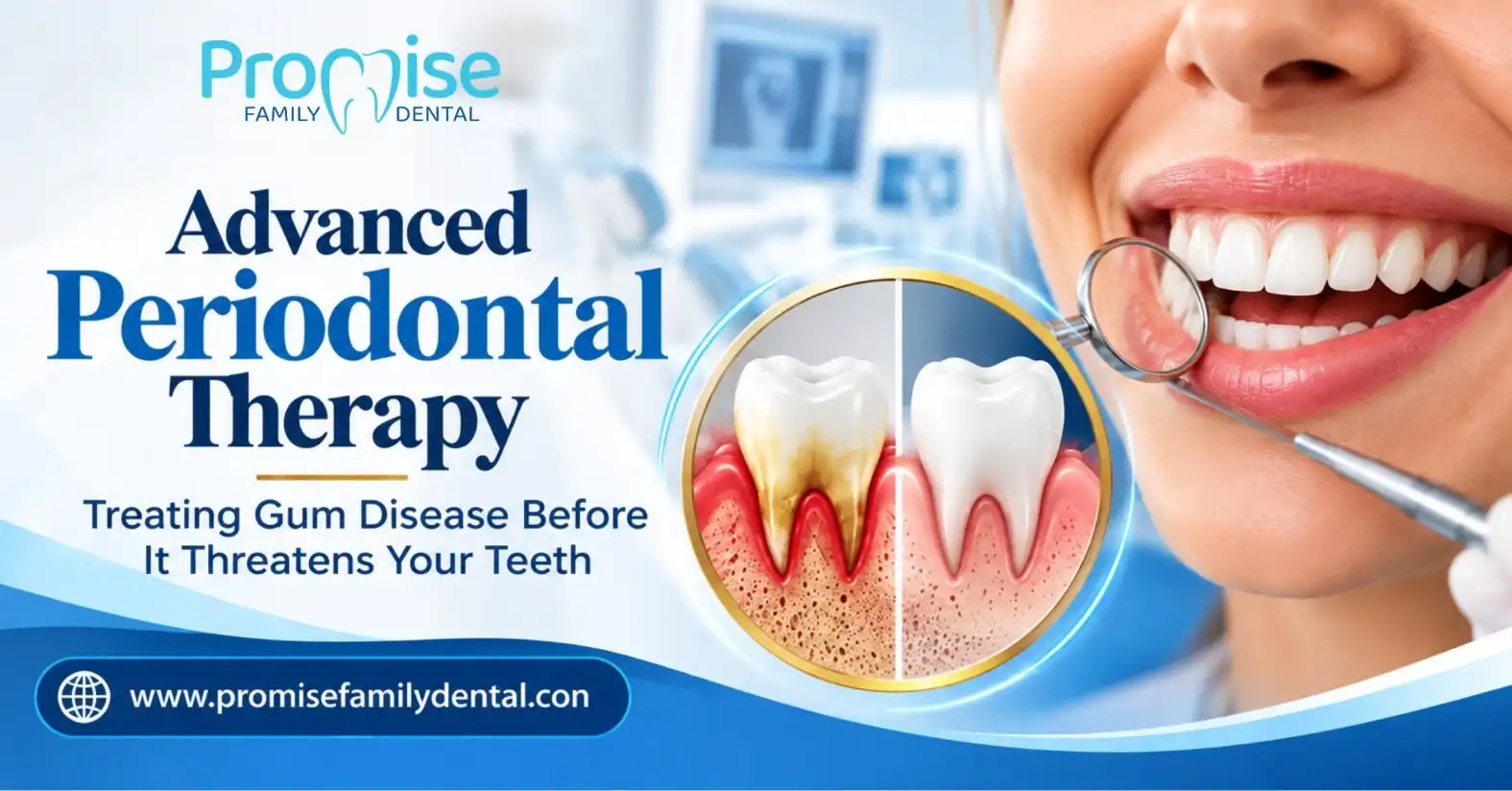
Advanced Periodontal Therapy: Treating Gum Disease Before It Threatens Your Teeth
Gum disease rarely announces itself early. It starts quietly, with slightly puffy or bleeding gums that many people brush off, and by the time it's uncomfortable enough to notice, it may have already progressed past what a routine cleaning can reverse. Advanced periodontal therapy is the set of treatments used at that later stage, when gum disease has moved beyond gingivitis and started affecting the bone and tissue that hold teeth in place. This guide covers what these treatments involve, the stages of gum disease that call for them, and how to recognize the warning signs before things progress further.
What Is Advanced Periodontal Therapy?
Advanced periodontal therapy refers to a group of treatments used once gum disease has progressed beyond what non-surgical cleaning can address. Where a standard cleaning removes plaque above the gumline, these therapies target infection and bone loss below it, aiming to stop the disease's progression, reduce pockets between gum and tooth, and in some cases regenerate lost bone and tissue.
The Stages of Gum Disease and Where Advanced Therapy Comes In
Advanced periodontal therapy is generally reserved for the moderate-to-severe end of that scale, once the disease has moved past what deep cleaning alone can resolve.
Common Treatments Included in Advanced Periodontal Therapy
- Scaling and root planing — a deep cleaning that removes plaque and tartar from below the gumline and smooths tooth roots so gums can reattach
- Laser periodontal therapy — targets infected tissue with less bleeding and discomfort than traditional surgery
- Pocket reduction surgery (flap surgery) — gum tissue is folded back to remove bacteria and tartar, then secured to fit more snugly around the tooth
- Bone grafting — replaces bone lost to advanced disease, giving teeth a more stable foundation
- Guided tissue regeneration — uses a special membrane to encourage bone and tissue to regrow in areas damaged by infection
- Localized antibiotic therapy — antibiotics placed directly into gum pockets to control infection alongside other treatments
A Dentist in Suffern experienced in periodontal care will typically recommend a combination of these based on how far the disease has progressed and how your gums respond to initial treatment.
Signs You May Need Advanced Periodontal Therapy
- Gums that bleed regularly, even with gentle brushing
- Gum pockets your dentist measures as deeper than 5–6mm
- Teeth that feel loose or have shifted position
- Persistent bad breath that doesn't improve with better home care
- Visible gum recession or teeth that look "longer" than before
- Gum disease that hasn't improved after a standard deep cleaning
During a routine checkup, a practice offering General Dentistry in Suffern will typically measure pocket depth and check for bone loss on X-rays, which is usually how early-stage disease gets caught before it needs anything more advanced.
What the Data Shows
Roughly 42% of U.S. adults over 30 have some form of periodontal disease, and about 1 in 13 has a severe form, underscoring how common the shift from gingivitis to something requiring more advanced treatment really is. (Source: CDC Oral Health Surveillance Report)
The Tipping Point We Often See in Suffern Patients
A pattern shows up often enough to be worth naming: a patient has known about mild gum bleeding for years, mentions it in passing at cleanings, and keeps deferring treatment because nothing hurts yet. It's usually not until a hygienist measures pocket depths that have quietly deepened, or an X-ray shows bone loss that wasn't there two years earlier, that the conversation shifts from "let's watch this" to "this needs more than a cleaning." Catching that shift early, before teeth loosen or bone loss becomes significant, is generally what determines whether treatment stays conservative or moves toward surgical options.
Frequently Asked Questions
Is advanced periodontal therapy painful?
Most procedures are done with local anesthesia, and options like laser therapy tend to involve less discomfort than traditional surgery. Some soreness and sensitivity for a few days afterward is normal, and your dentist will typically provide aftercare instructions to manage it.
Can advanced periodontal therapy reverse bone loss?
Treatments like bone grafting and guided tissue regeneration can help regrow some lost bone and tissue, though the amount of regeneration varies by case. The goal is usually to stabilize the disease and rebuild what's realistically recoverable, not to fully restore what was lost.
How often will I need follow-up visits after treatment?
Most patients move to more frequent periodontal maintenance visits, often every 3–4 months instead of the standard twice-yearly cleaning, since gum disease requires closer monitoring even after successful treatment.
Reviewed by Dr. Jacob John, DDS, clinical reviewer for Promise Family Dental.
Noticing gum bleeding, recession, or looseness that hasn't improved? Request an Appointment today, or call (845) 356-8844 to talk to our Suffern office about periodontal care.
Article Author

Arobit
Blog Admin
Tags
Latest Posts
-
5 Signs an Emergency Dental Clinic in Suffern Is Actually Equipped to Handle Same-Day Care
-

Why Personalized Preventive Dental Care in Suffern Beats a Generic Six-Month Checkup
-

Smile Contouring: The Fastest, Least-Invasive Way to Refine Your Smile's Shape
-
Implant-Supported Dentures: The Premium, Fixed Alternative to Traditional Removable Dentures
-
Dental Implants in Suffern vs. Dentures vs. Bridges: Which Tooth Replacement Option Is Right for You?
Similar Posts
-
Implant-Supported Dentures: The Premium, Fixed Alternative to Traditional Removable Dentures
-
Invisalign vs. Traditional Braces: An Honest Comparisons
-

5 Signs You've Found a Trusted Dentist for Your Family
-

5 Things to Look For When Choosing a Family Dentist in Rockland County
-
Tooth Pain Relief: How to Manage a Toothache Before You Can See a Dentist


